



PROTAC Linkers
PROTACs (Proteolysis Targeting Chimeric Molecules) are heterobifunctional protein degraders and promising targeted therapeutics candidates for cancer. The PROTAC linker connects two functional motifs of a PROTAC, a target protein binder and an E3 ligase recruiter.
The linker plays an important role in a PROTAC. The features of the linker (type, length, attachment position) can affect the formation of ligase:PROTAC:target ternary complex, resulting in influencing the efficient ubiquitination of the target protein and its ultimate degradation. The optimal lengths of the PROTAC linkers are reported varying from 12-carbon to over 20-carbon, and the commonly used linkers in the development of PROTACs are PEGs, Alkyl-Chain and Alkyl/ether.
PROTAC Linkers Isoform Specific Products
All Product Categories
-
PROTAC Linkers Related Products (4098)
Related Products (4098)

-
PROTAC Linkers Isoform Comparison
-
NH2-C4-NH-Boc
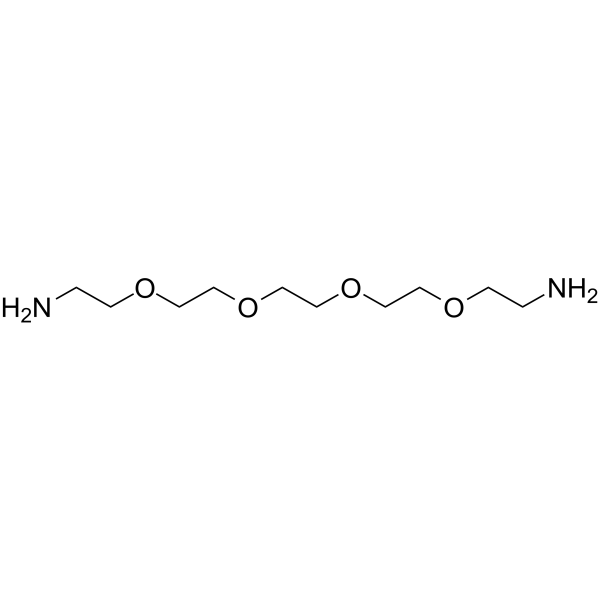
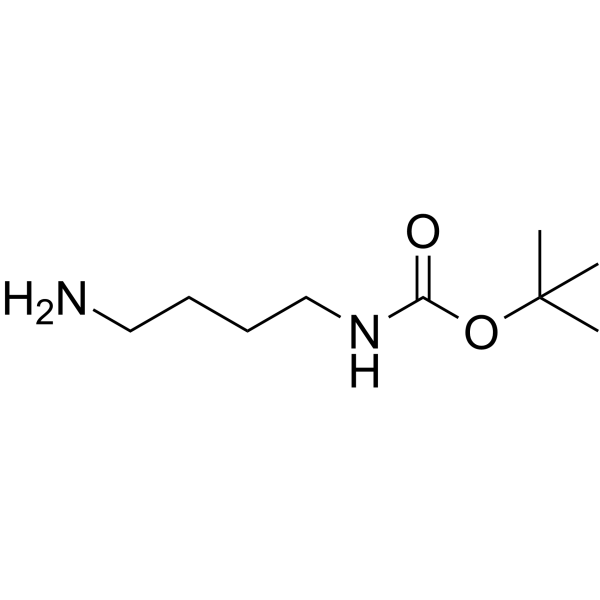 0 ImagesNH2-C4-NH-Boc (compound 15) is a PROTAC linker, which refers to the Alkyl/ether composition. NH2-C4-NH-Boc can be used in the synthesis of a series of PROTACs. PROTACs contain two different ligands connected by a linker; one is a ligand for an E3 ubiquitin ligase and the other is for the target protein. PROTACs exploit the intracellular ubiquitin-proteasome system to selectively degrade target proteins.
-
Fmoc-NH-PEG4-CH2COOH
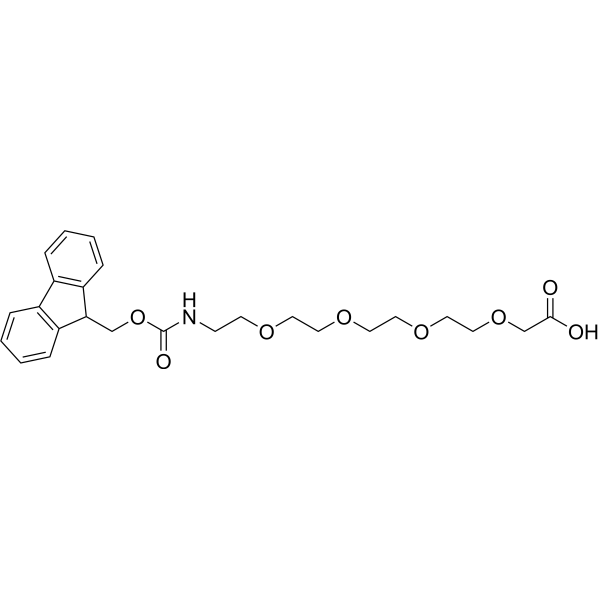 0 ImagesFmoc-NH-PEG4-CH2COOH is a cleavable ADC linker used in the synthesis of antibody-drug conjugates (ADCs). Fmoc-NH-PEG4-CH2COOH is also a PEG-based PROTAC linker that can be used in the synthesis of PROTACs.
-
Propargyl-PEG2-amine
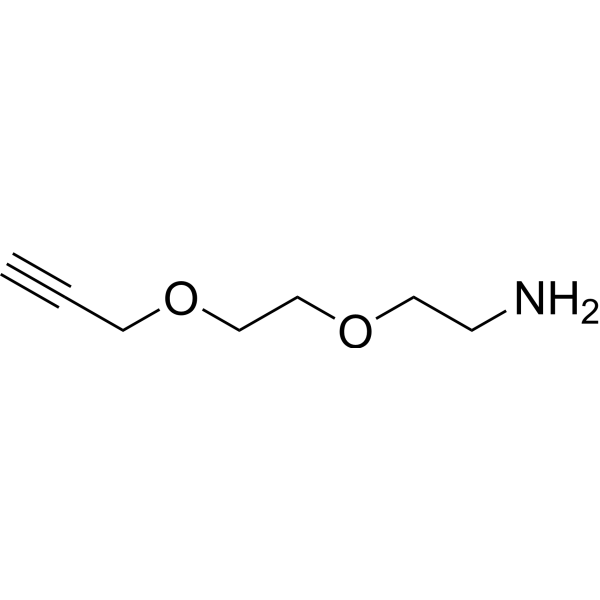 0 ImagesPropargyl-PEG2-amine is a non-cleavable ADC linker used in the synthesis of antibody-drug conjugates (ADCs). Propargyl-PEG2-amine is a PEG-based PROTAC linker can be used in the synthesis of PROTACs. Propargyl-PEG2-amine is a click chemistry reagent, it contains an Alkyne group and can undergo copper-catalyzed azide-alkyne cycloaddition (CuAAc) with molecules containing Azide groups.
-
Methyltetrazine-PEG4-maleimide
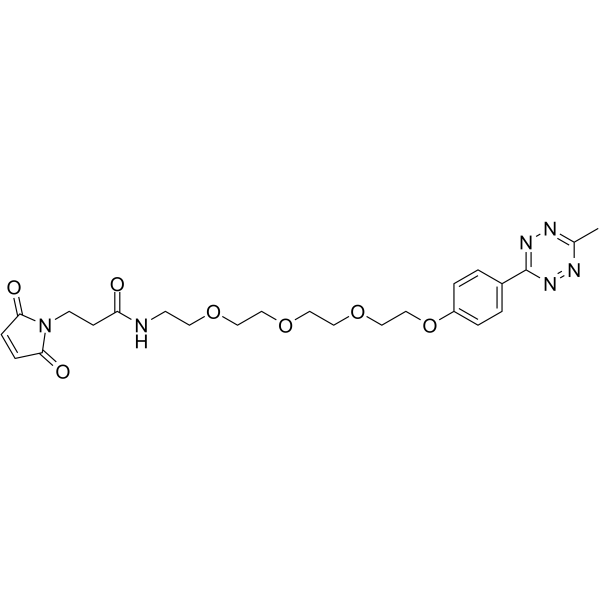 0 ImagesMethyltetrazine-PEG4-maleimide is a PEG-based PROTAC linker that can be used in the synthesis of PROTACs. Methyltetrazine-PEG4-maleimide is a click chemistry reagent, it contains a Tetrazine group that can undergo an inverse electron demand Diels-Alder reaction (iEDDA) with molecules containing TCO groups.
-
10-Hydroxydecanoic acid
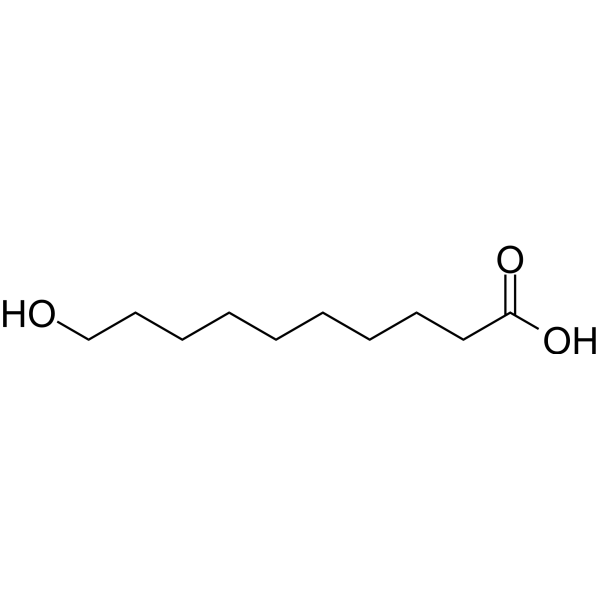 0 Images10-Hydroxydecanoic acid (10-HDAA) is a saturated fatty acid derived from 10-hydroxy-trans-2-decenoic acid, which can be isolated from royal jelly. 10-Hydroxydecanoic acid exhibits various biological activities, including anti-inflammatory, insecticidal, anti-malarial, and anti-Leishmania properties, as well as enhancing antigen-specific immune responses. The anti-inflammatory effects of 10-Hydroxydecanoic acid are primarily mediated by inhibiting the activation of NF-κB and the translation of interferon regulatory factor 1 (IRF-1), which reduces the production of interleukin 6 (IL-6) and nitric oxide (NO) in inflammatory cells. Additionally, 10-Hydroxydecanoic acid alleviates neuroinflammatory responses through the p53-autophagy pathway and the p53-NLRP3 pathway. Finally, 10-Hydroxydecanoic acid enhances antigen-specific immune responses by promoting the effective uptake of antigens by microfold cells.
-
4-Azidobutyric acid
 0 Images4-Azidobutyric acid is a click chemistry reagent featuring azide and carboxylic acid moieties. The carboxylic acid group can conjugate with alcohols or amides, while the azide group serves as a click chemistry handle to react with terminal alkynes or strained cyclooctynes. 4-Azidobutyric acid also acts as a PROTAC linker for the synthesis of PROTACs.
-
Hex-5-yn-1-ol
 0 ImagesSynonyms: 5-Hexyn-1-ol
-
tert-Butyl 9-oxo-3-azaspiro[5.5]undecane-3-carboxylate
![tert-Butyl 9-oxo-3-azaspiro[5.5]undecane-3-carboxylate](https://file.medchemexpress.com/product_pic/hy-w043503.gif "Click to View tert-Butyl 9-oxo-3-azaspiro[5.5]undecane-3-carboxylate Product Detail") 0 ImagesCat. No.: HY-W043503CAS No.: 873924-08-4
0 ImagesCat. No.: HY-W043503CAS No.: 873924-08-4

-
N-Boc-PEG2-bromide
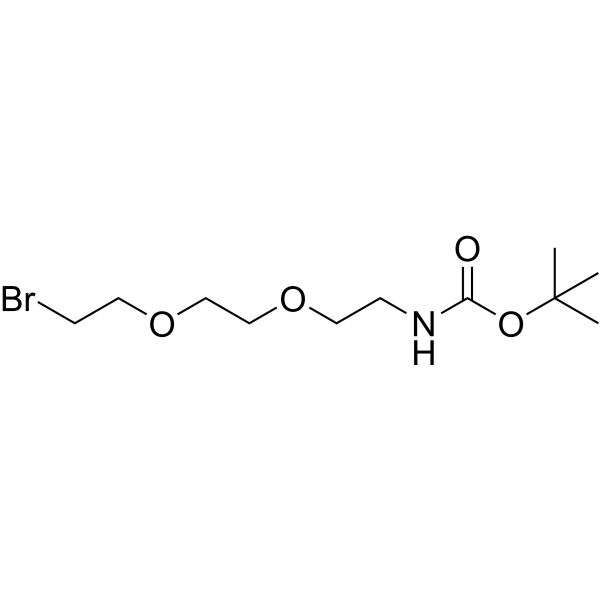 0 ImagesN-Boc-PEG2-bromide is a PEG/Alkyl/ether-based PROTAC linker can be used in the synthesis of PROTACs. N-Boc-PEG2-bromide is a cleavable ADC linker used in the synthesis of antibody-drug conjugates (ADCs).
-
TLR4-IN-C34-C2-COOH
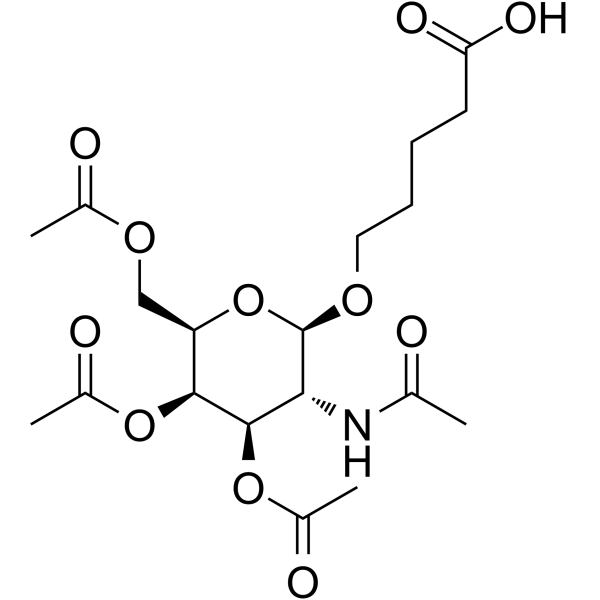 0 ImagesTLR4-IN-C34-C2-COO is a linker that incorporates TLR4 inhibitor TLR4-IN-C34. TLR4-IN-C34-C2-COOH can be used in the research of inflammation and acute myocardial injury. TLR4-IN-C34 inhibits TLR4 in enterocytes and macrophages, and reduces systemic inflammation in mouse models of endotoxemia and necrotizing enterocolitis.
-
Azido-PEG10-amine
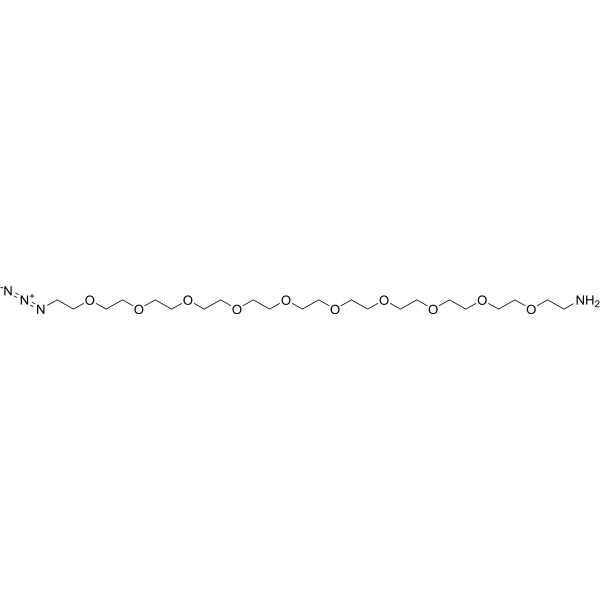 0 ImagesCat. No.: HY-140217CAS No.: 912849-73-1Azido-PEG10-amine is a PEG-based PROTAC linker that can be used in the synthesis of PROTACs. Azido-PEG10-amine is a click chemistry reagent, it contains an Azide group and can undergo copper-catalyzed azide-alkyne cycloaddition reaction (CuAAc) with molecules containing Alkyne groups. It can also undergo strain-promoted alkyne-azide cycloaddition (SPAAC) reactions with molecules containing DBCO or BCN groups.
-
Pimelic acid
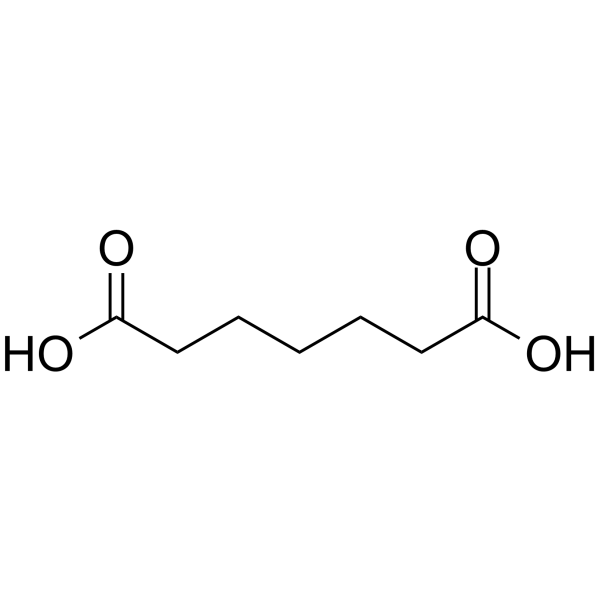 0 ImagesSynonyms: Heptanedioic acid; 1,5-Pentanedicarboxylic acid; 1,7-Heptanedioic acidPimelic acid (Heptanedioic acid; 1,5-Pentanedicarboxylic acid) is a seven-carbon α,ω-dicarboxylic acid and a downstream product of fatty acid synthesis. Pimelic acid is a key precursor in biotin biosynthesis. Pimelic acid can be converted to pimelic acid-CoA by the BioW enzyme, thereby bypassing exogenous biotin requirements to support growth in various biotinytrophic bacteria and fungi, and reversing antibiotic-induced inhibition of biotin synthesis. Furthermore, Pimelic acid has been proposed as a highly specific biomarker for oxygen-induced retinopathy in mice. Pimelic acid can be used to study retinopathy of preterm infants, oxygen-induced retinopathy, and microbial biotin metabolism.
-
Fmoc-NH-PEG3-CH2CH2COOH
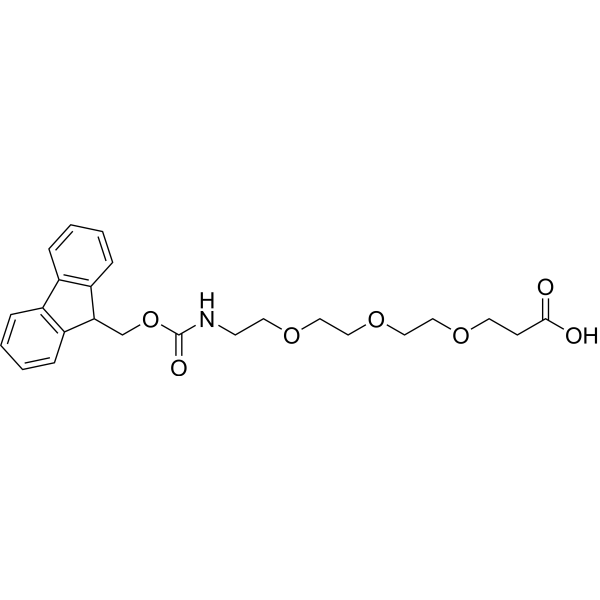 0 ImagesFmoc-NH-PEG3-CH2CH2COOH is a cleavable ADC linker used in the synthesis of antibody-drug conjugates (ADCs). Fmoc-NH-PEG3-CH2CH2COOH is also a PEG-based PROTAC linker that can be used in the synthesis of PROTACs.

-
6-Bromohexanoic acid
 0 ImagesSynonyms: 6-bromohexanoate



